Although both beer brewing equipment and distillation equipment fall under the category of alcoholic beverage production equipment, they differ essentially in terms of process principles, structural design, product forms and application scenarios.
I. Different Production Principles (Fundamental Distinction)
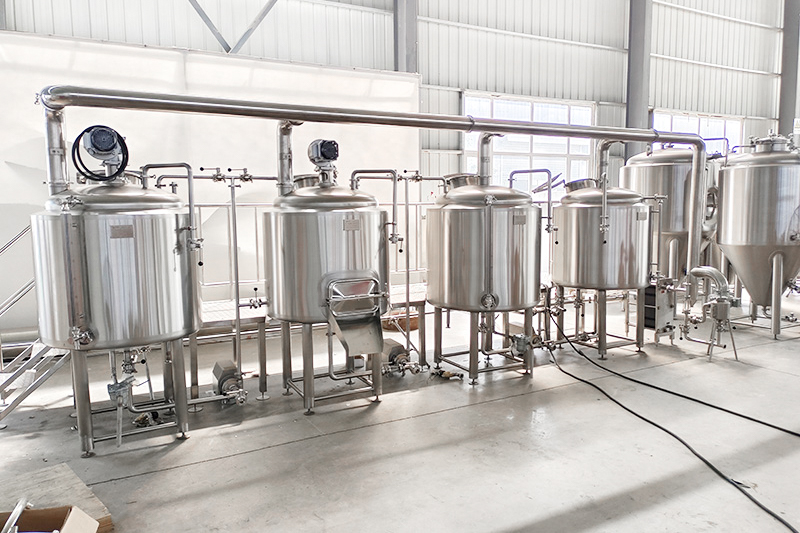
Beer Brewing Equipment: Fermentation-centric, No Distillation
Core process: Mashing → Fermentation → Maturation → Filling
Alcohol source: Natural fermentation by yeast
Alcohol content: Typically 3%–8% vol
Key focus: Flavor control and taste stability
Distillation Equipment: Alcohol Purification via Distillation
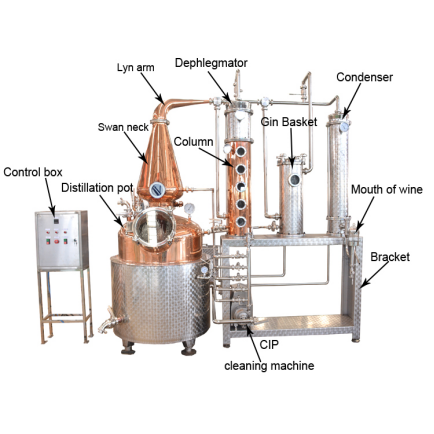
Core process: Fermentation → Distillation → Condensation → Maturation
Alcohol source: Fermentation plus physical distillation and separation
Alcohol content: Up to 40%–70% vol
Key focus: Alcohol purity and aroma separation
One-sentence summary:
Beer is brewed and consumed for its fermented flavors; spirits are refined by distillation to boost alcohol content.
II. Different Structural Compositions
Main Components of Beer Brewing Equipment:
- Mash tun / Mashing system
- Lauter tun
- Brew kettle / Whirlpool tank
- Fermenters (Conical fermenters)
- Brite tanks (Maturation tanks)
- Cooling systems, Filling systems
Characteristics:
Multi-tank combined system, large in volume with adjustable automation levels, and no high-temperature alcohol distillation involved.
Main Components of Distillation Equipment:
- Still (Pot still or column still)
- Distillation column / Trays / Packing
- Condenser
- Alcohol separation system
- Spirit collection system
Characteristics:
More compact structure, with strict requirements for pressure resistance, high temperature resistance and airtightness.
III. Different Products & Application Scenarios
Beer Brewing Equipment Application Scenarios:
- Industrial breweries
- Craft breweries
- On-site brewing in restaurants and pubs
- Beer houses and bars
Distillation Equipment Application Scenarios:
- Distilleries for whiskey, vodka and rum
- Gin and brandy production
- Alcohol purification or essential oil distillation
- Laboratories / Small-scale distilleries
Note: Some distilleries use beer fermenters paired with independent distillation equipment (e.g., for whiskey production).
IV. Different Regulatory & Compliance Requirements (Highly Important)
Beer Brewing Equipment:
- Relatively relaxed regulation in most countries
- Core focus on food safety and hygiene standards
Distillation Equipment:
- Alcohol distillation is a strictly regulated industry in many countries
- Special alcoholic beverage production licenses are required; private distillation is restricted in some regions
Core Summary
Beer brewing equipment, centered on fermentation and flavor control, is suitable for producing low-alcohol fermented beverages. Distillation equipment, focused on alcohol purification and separation, is designed for high-alcohol spirit production.
The two types of equipment differ fundamentally in process principles, and their structural designs and regulatory requirements are also completely distinct.
For all your beer brewing equipment needs, contact Tonsen
Email: info@tonsenbrew.com